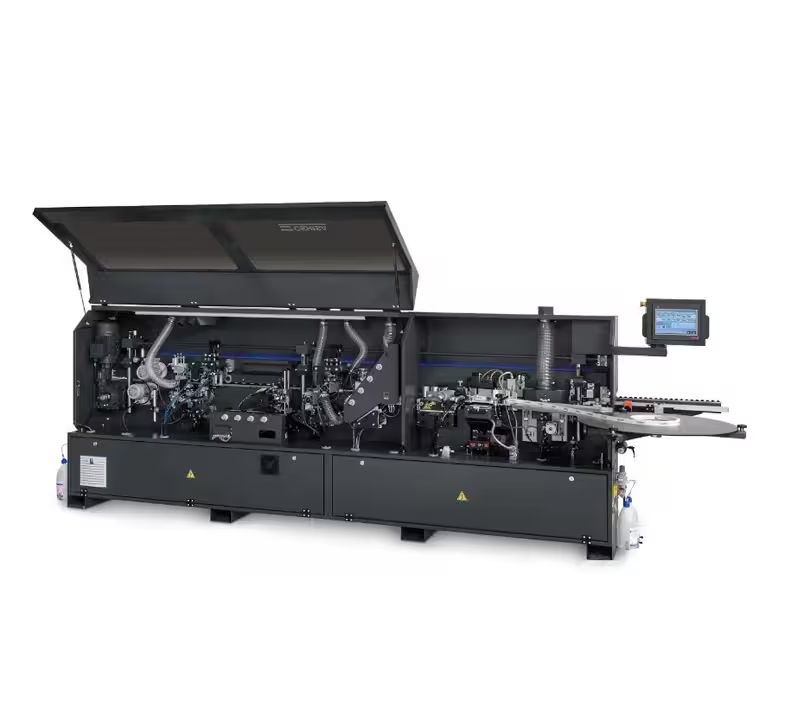

Wall saws and panel saws both cut large sheets of MDF, ply, chipboard and laminated board down to size. The difference is how they do it, how much floor space they need and what else they can cut. This guide covers the main differences so you can work out which one suits your workshop.

What Is a Wall Saw?
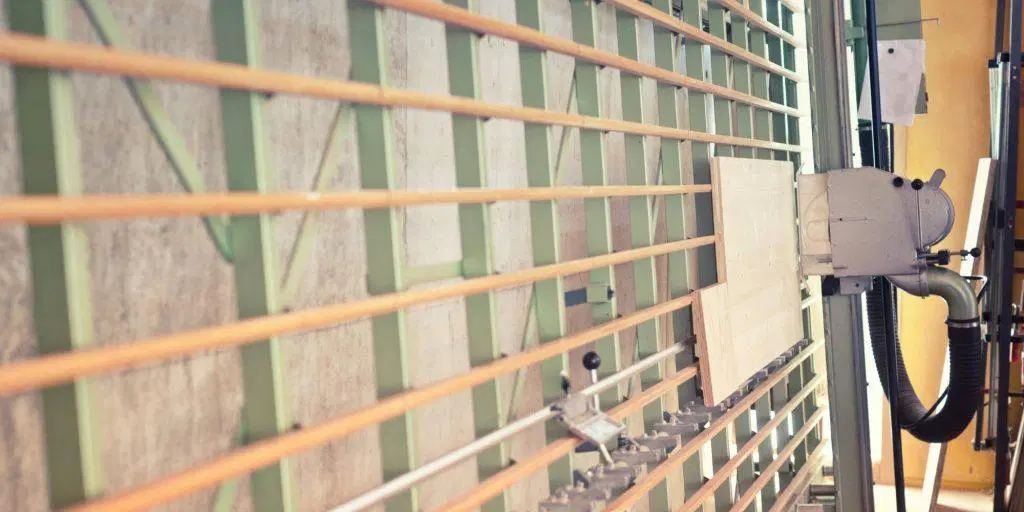
A wall saw, also called a vertical panel saw, holds the sheet upright against a frame. The saw unit runs on a beam that moves up and down the frame. It can rotate 90°, so it can cut across the sheet as well as along it. The sheet rests on a row of rollers at the bottom of the frame and stays still while the saw moves.
Striebig, a Swiss manufacturer, is one of the best-known makers of wall saws, and we’ve supplied their machines to workshops across the UK.
What Is a Panel Saw?
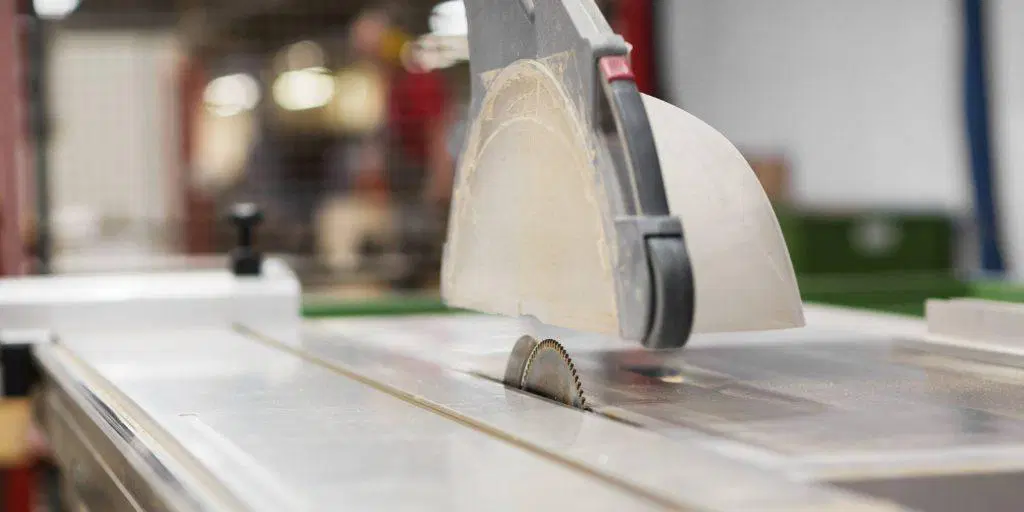
A sliding table panel saw is a horizontal machine. The blade is fixed in the table, and the sheet sits on a sliding carriage that you push past the blade. Most have a scoring blade to stop laminated boards chipping, and many can tilt the blade for bevel cuts.
The Main Differences
Floor space. This is the main reason people choose a wall saw. A sliding table saw with a 3.2m carriage needs clear space on all sides to handle a full sheet, so it can take up 30 square metres or more. A wall saw stands against a wall and needs well under half that.
Loading. With a wall saw, one person can slide a full sheet onto the rollers. A full sheet on a sliding table saw is easier with two people.
Materials. Wall saws are built for sheet material. Sliding table saws handle sheets and solid timber, and can cut bevels, angles and small parts that a wall saw can’t.
Accuracy. Both cut accurately. Sliding table saws are usually better for fine finishing cuts and laminated boards that need a chip-free edge on both faces.
Safety. On a wall saw the blade is enclosed in the saw unit, and your hands don’t go near it. On a sliding table saw the operator works close to an exposed blade, so guarding and good habits matter more.
Which Should You Choose?
Choose a wall saw if you mainly cut sheet material, space is tight, or one person does most of the cutting. Shopfitters, sign makers and kitchen fitters often use them.
Choose a sliding table panel saw if you cut solid timber as well as sheets, need angled or bevel cuts, or want one saw for most jobs in a joinery or furniture workshop.
If you’re cutting a lot of sheets every day, a beam saw may suit you better than either.
Browse Our Machines
See our current wall saws, panel saws and beam saws. Every machine we sell is delivered, installed and supported by us, and finance is available. If you’re not sure which type fits, get in touch with your sheet sizes and how much you cut, and we’ll help you choose.